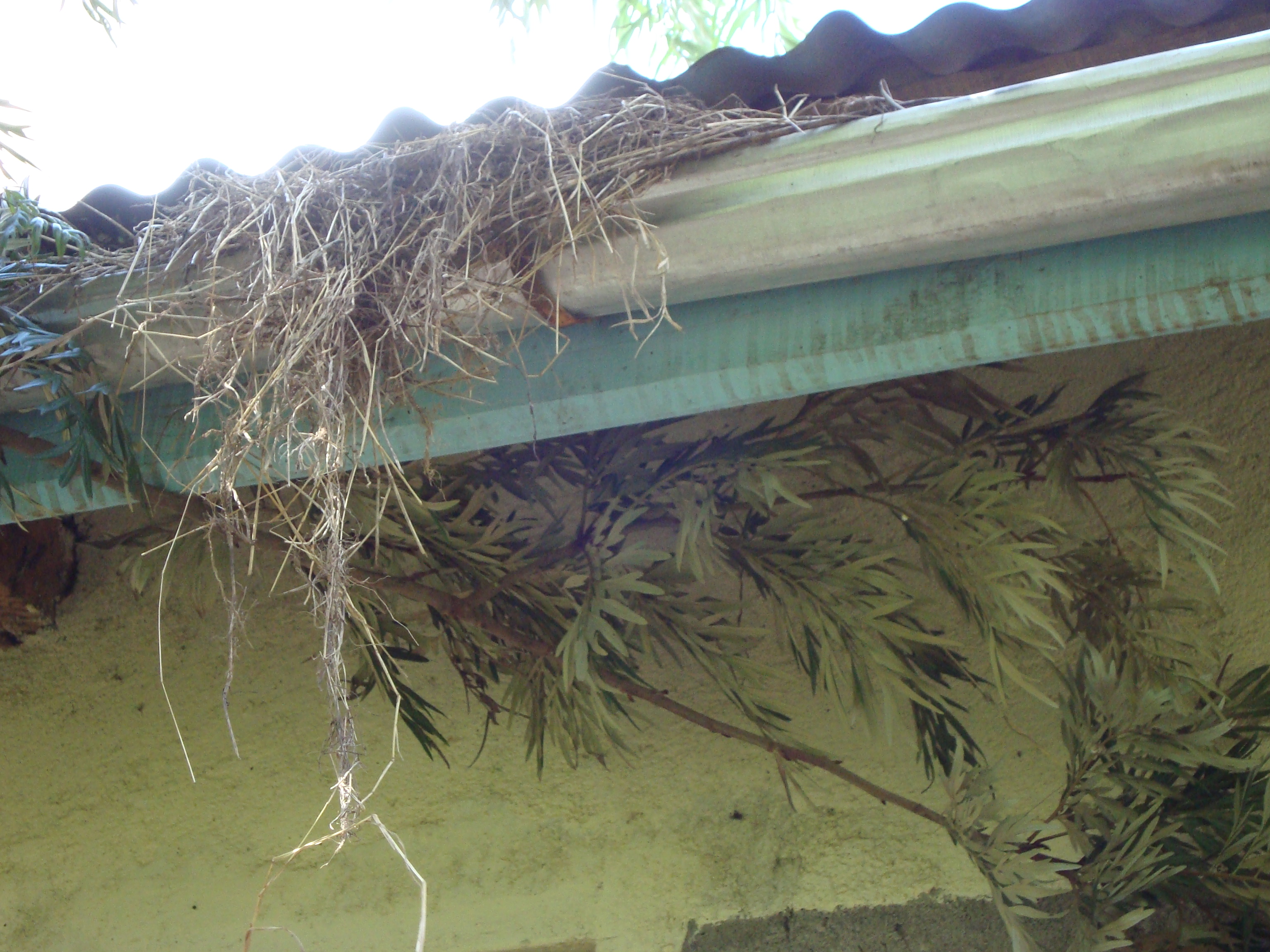
The Catchment Surface: Your Roof
The roof acts as the catchment area — all rainfall landing on it flows toward the gutters. The type of roofing material affects water quality. Asphalt shingles, the most common residential roofing material in Canada, can leach small amounts of hydrocarbons and particulates into runoff. Metal roofs produce cleaner water and are increasingly used in rural and cottage settings. Cedar shakes introduce tannins and wood compounds. For non-potable garden use, all of these are generally acceptable, though a first-flush diverter (described below) reduces contamination regardless of roofing material.
Roof area determines the maximum volume collectible per rainfall event. A rough calculation: 1 mm of rainfall over 100 m² of roof yields approximately 100 litres, minus losses to evaporation and initial surface absorption. A typical detached home in southern Ontario with 120–160 m² of roof surface can generate several hundred litres from a single 10–15 mm rain event.
Gutters: Sizing and Maintenance
Standard residential gutters in Canada are 100 mm (4-inch) or 125 mm (5-inch) K-style aluminum channels. For rainwater collection, the existing gutter system is usually adequate if it is in sound condition. Gutter slope should be sufficient to prevent standing water — at least 3–5 mm of fall per metre of horizontal run.
Debris accumulation is the primary maintenance issue for gutters used in rainwater collection. Leaves, pine needles, and organic matter decompose in the gutter and wash into the barrel, affecting water clarity. Gutter guards — mesh screens fitted over the gutter opening — reduce debris intake but do not eliminate it entirely. In areas with heavy deciduous tree cover, cleaning gutters at least twice a year (late spring after bud break, and mid-autumn after leaf fall) is advisable.
Key system components
- Gutter — Channels roof runoff horizontally toward the downspout.
- Downspout — Vertical pipe directing water from the gutter to ground level.
- First-flush diverter — Intercepts and discards the initial, most-contaminated portion of each rain event.
- Inlet screen — Prevents debris and insects from entering the storage barrel.
- Storage barrel or cistern — Holds collected water between rain events.
- Overflow outlet — Directs excess water away from the foundation when the barrel is full.
Downspouts and the Collection Point
The downspout is where the collection system connects to the storage container. In most installations, the downspout is cut and fitted with a diverter or a simple elbow that redirects flow into the barrel lid opening. Downspout diverters — available at hardware stores — attach to the existing downspout and include a built-in overflow path: when the barrel fills, the diverter redirects water back down the downspout to the original ground outlet, protecting the foundation.
The connection point between the downspout and the barrel should be sealed around the inlet screen to prevent insects from entering the gap. Mosquitoes breed in standing water; a barrel that is open at the top or poorly sealed can become a breeding site within a week in warm weather. Municipal public health departments in many Canadian cities recommend checking barrel screens at least monthly during summer.
First-Flush Diverters
The first few millimetres of rainfall in any event carry the highest concentration of roof contaminants: dust, bird droppings, decomposed organic matter, and atmospheric particulates that have settled on the roof between rain events. A first-flush diverter intercepts this initial flow and holds it in a separate chamber, typically a vertical pipe, allowing it to drain slowly through a small orifice after the rain ends. The cleaner water that follows then enters the storage barrel.
First-flush diverters are sized based on roof area. A common recommendation from conservation authorities is to divert approximately 25 litres per 100 m² of catchment area. This can be achieved with a standpipe of appropriate volume attached below the diverter body. Some municipalities in British Columbia have included first-flush diverter installation in their rainwater collection guidelines.
Underground Cisterns
For larger collection volumes, underground cisterns made from polyethylene or fiberglass can store 1,000 litres or more beneath a driveway or yard. These require excavation and are more complex to install than above-ground barrels, but they maintain more stable water temperature (reducing algae growth), do not require seasonal draining in most installation depths, and are not subject to freeze damage in most southern Canadian locations when buried below the frost line.
Frost line depths vary considerably across Canada: approximately 0.8–1.2 m in coastal British Columbia, 1.5–1.8 m across most of Ontario and Quebec, and deeper across Prairie provinces. A cistern buried below the local frost line will not freeze and can remain connected to the collection system year-round, though the downspout sections above ground still require seasonal disconnection in cold climates.
Connecting Multiple Barrels
Two or more barrels can be connected in series using a short length of garden hose attached between the overflow outlet of the first barrel and the inlet of the second. Water fills the first barrel completely before flowing into the second. This arrangement, sometimes called a daisy chain, is a straightforward way to increase storage without major modifications to the downspout or foundation area.
Alternatively, barrels connected in parallel — with both inlets attached to a Y-fitting on the downspout — fill simultaneously and at a lower rate per barrel, which can reduce the risk of overflow during heavy rain.
Seasonal Disconnection in Canada
Before the first forecast frost, the barrel should be fully drained and the downspout reconnected to its original ground-level outlet. Many barrel diverters include a winter bypass position that redirects all flow down the downspout without requiring the diverter to be removed. This simplifies spring reconnection. The drained barrel can be stored upside down on the platform to prevent debris accumulation and UV exposure over winter.
References
- Environment and Climate Change Canada — Water Conservation
- City of Kingston — Water Conservation Programs
- Natural Resources Canada — Home Water Efficiency
Last updated: May 20, 2026